Production Chains in Farming Simulator 25
Turn raw crops and animal products into flour, bread, cheese, oil, planks, and more with linked factories.
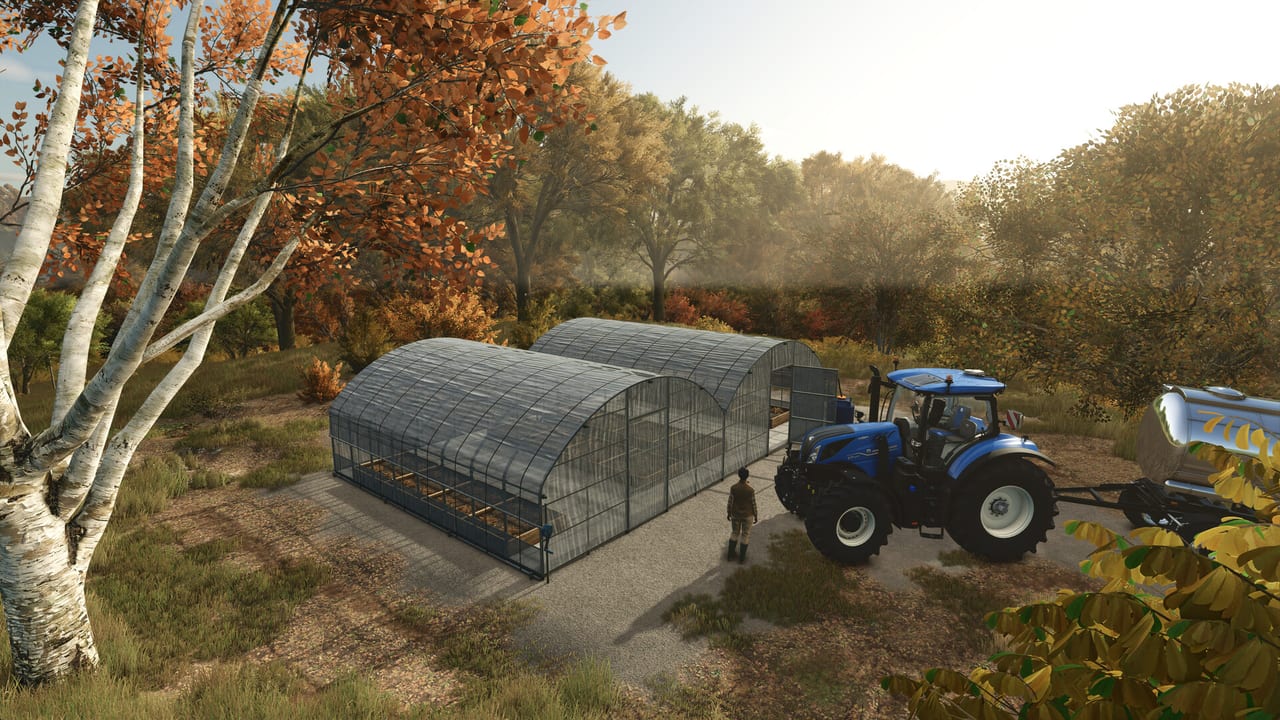
Production chains are the mid-game leap in Farming Simulator 25. Instead of tipping every harvest at the nearest sell point, you place factories that convert wheat into flour, flour into bread, milk into cheese, logs into planks, and oilseeds into cooking oil. Done well, a production loop multiplies the value of the same hectares you already farm. Done poorly, factories sit idle, burn monthly upkeep, and fill yards with unsold pallets.
This guide explains how productions work across Riverbend Springs, Hutan Pantai, and Zielonka, how Storing / Distributing / Selling modes differ, which starter chains pay for themselves first, and how to link buildings without drowning in logistics. Pair it with How to Make Money for cash timing and Crops and Calendar for feedstock planning. Rice-specific factories sit in Rice Paddies. Highlands Fishing fish-food and aquaculture loops are covered under Highlands Fishing.
How a production building works
Every production point has:
- Input storage for raw materials (wheat, milk, logs, water…).
- Recipes / lines that consume inputs on a cycle and create outputs.
- Output storage that fills with pallets, bales, or bulk products.
- Operating modes for each product: store on site, distribute to another production that needs it, or auto-sell with a cut.
- Monthly upkeep that ticks whether or not you feed the line.
Open the production menu from the map pin or by walking up to the building. Enable only the recipes you can supply. Running every line at once on a half-stocked mill wastes cycles.
Store, distribute, or sell
- Storing — safest default. Outputs pile up until you haul them to a sell point or another factory. Full control, no auto-sell fee.
- Distributing — free internal transfer to another owned production that accepts that fill type (flour → bakery). Perfect for linked chains.
- Selling — the game sells for you and takes a percentage (often cited around 20–40% depending on economy difficulty). Convenient, rarely optimal once you own a truck.
Beginners should Store, then manually sell or set Distribute once the next building is online.
Best starter chains
Grain mill → bakery
The classic FS25 loop. Feed the grain mill with wheat, barley, oats, sorghum, rice, or long grain rice to produce flour (and rice flour). Send flour to a bakery with eggs, sugar, butter, bottled milk, or strawberries for bread and cake.
Why it works early:
- Wheat and barley are easy first crops on Riverbend Springs.
- Small mill and bakery purchase prices are reachable after a few contract seasons.
- Bread sells consistently and stacks well on pallets.
Tips: keep one silo dedicated to mill feedstock, enable only the grain recipes you actually grow, and distribute flour instead of auto-selling it. Eggs from chickens and greenhouse strawberries unlock cake when you are ready to scale.
Oil mill
Canola, sunflower, olive, soybean, and rice oil lines turn oilseeds into cooking oil used by other factories (chips, soups, fish food with Highlands Fishing). An oil mill pairs cleanly with a canola rotation from Best Crops.
Dairy
Once cows or water buffalo produce milk reliably—see Animals and TMR—a dairy turns milk into cheese, butter, chocolate milk, and related goods. Dairy is logistics-heavy: you need steady milk, clean pallet handling, and often sugar or other additives for premium recipes. Do not buy a large dairy before TMR is stable.
Greenhouse (water only)
Greenhouses need water, not field hectares. Strawberries, lettuce, tomatoes, and other produce feed bakeries and soup factories while your fields grow grain. Place them near a water source or plan tanker runs. They are excellent passive income while contracts fund bigger iron—covered in the money guide.
Sawmill → carpentry / cooper
Logging income becomes furniture, barrels, and building materials when you add a sawmill. If you already run Forestry, production is the natural next step: haul logs, cut planks, distribute into carpentry, sell finished pallets at peak prices.
Logistics that keep factories alive
Productions fail more often from empty inputs than from bad recipes.
- Place factories near silos, animal barns, or forest unload points.
- Use Autoload-capable trailers or Universal Autoload (PC ModHub) for pallet hauling—see Mods Guide.
- Schedule a weekly “factory run”: refill inputs, clear output pallets, check upkeep.
- Watch production status icons on the map; red usually means starved or full.
- On multiplayer farms, assign one player as logistics lead so lines do not stall overnight—see Multiplayer.
Economy difficulty and profitability
Harder economies widen the gap between raw crop sales and processed goods, which makes chains more valuable—but also punishes idle buildings harder. On easy economies you can still profit from bread and cheese; on hard economies, skipping production leaves more money on the table.
Always compare:
- Raw sell price × expected yield
- Versus processed sell price × recipe ratio − upkeep − haul time
Community spreadsheets help, but in-game Prices and production menus are enough for a first mill/bakery pair.
Map notes
Riverbend Springs — barge terminals and early productions make mill → bakery friendly. Collectible cash from the money guide can fund the first buildings.
Hutan Pantai — rice and long grain rice feed mills and rice-specific productions; water logistics matter. Read Rice Paddies.
Zielonka — mixed European layout suits dairy + grain chains with shorter road hauls between barns and factories.
DLC maps such as Kinlaig add fish food factories and onion processing—see Highlands Fishing.
Common mistakes
- Enabling every recipe while supplying only one crop.
- Auto-selling flour that a bakery next door needs.
- Buying a huge mill before you own enough hectares to feed it.
- Ignoring monthly upkeep on unused lines.
- Letting output storage fill so cycles stop.
- Mixing production mods that alter capacities without reading changelogs after patches (Updates Hub).
Suggested build order
- Stabilize field income and contracts (Make Money).
- Place a small grain mill near a silo; store flour.
- Add a bakery; distribute flour; sell bread manually at first.
- Add chickens / greenhouse for cake ingredients.
- Add oil mill when canola or sunflower acreage is steady.
- Add dairy only after TMR and milk volume are reliable.
- Add sawmill if forestry is already profitable.
Checklist
- Know Store vs Distribute vs Sell.
- Feed one recipe fully before enabling five.
- Keep pallet space clear every session.
- Link mill → bakery before chasing exotic factories.
- Revisit Prices after DLC adds new sell points.
- Bookmark this page beside Guides Hub for mid-game planning.
Master production chains and Farming Simulator 25 stops being “drive combine, sell grain.” It becomes a logistics game where the same fields fund bakeries, dairies, and workshops that print steady pallet income between harvests.
Frequently Asked Questions
Quick answers to the most common FarmSim questions.
Should I auto-sell production outputs in FS25?
Usually no. Store or Distribute instead. Auto-sell takes a cut; hauling pallets yourself keeps full value once you own a suitable trailer.
What is the best first production chain?
Grain mill into bakery. Wheat or barley feedstock is easy, buildings are affordable, and bread is a reliable sell product.
Do productions work the same on console?
Yes for base-game factories and modes. PC players may add Autoload mods for faster pallet work; console players use stock trailers and helpers.
Why did my production stop?
Usually missing inputs, full output storage, disabled recipes, or unpaid/blocked logistics. Check the production menu status and clear pallets.